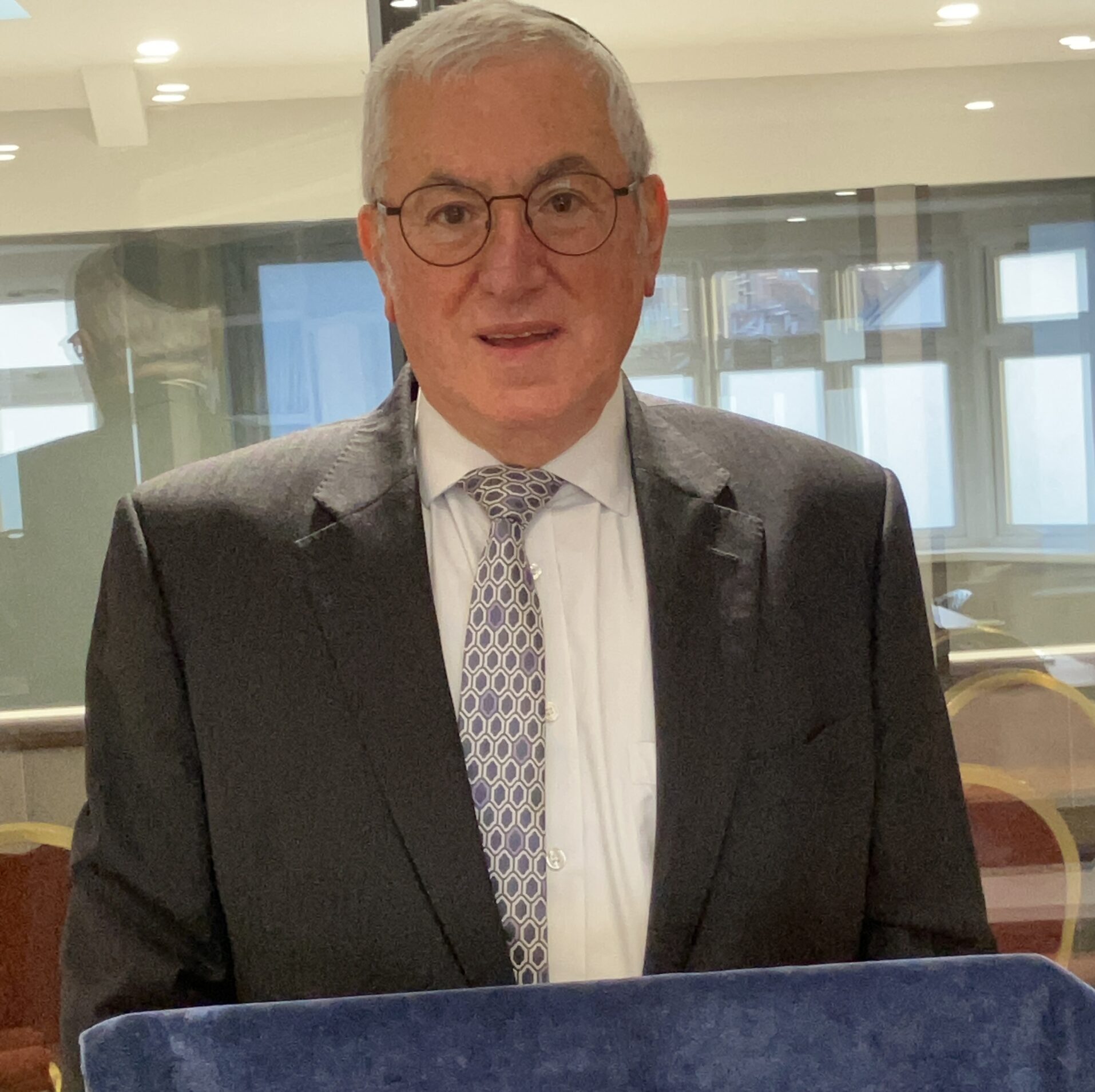
Rev. Isaac Davidson was an important figure in the early history of the Jewish community in Dublin, Ireland. Appointed in 1829, he served the Jewish congregation in Dublin, subsequently known as the Dublin Hebrew Congregation, as reader, shochet and Mohel until his death on 6 December 1844.
His career provides an insight into the religious life of the Jewish community in Ireland during the early 19th century, when a relatively small congregation depended upon dedicated religious officials to maintain its traditional practices.
As a Mohel, Davidson played a particularly important role in maintaining the religious tradition of Brit Milah (Jewish circumcision) within the Dublin Jewish community.
Early Life and Career of Rev. Isaac Davidson
His Origins in the Duchy of Posen
Rev. Isaac Davidson was born in Fordon, in the Duchy of Posen, and arrived in Britain around 1820.
His Early Religious Appointments in Britain
Before moving to Dublin, Davidson served as a reader and shochet in the Brighton Hebrew Congregation and subsequently in Sunderland. He also served as private secretary to Chief Rabbi Solomon Herschell in London, who held the office of Chief Rabbi from 1802 until 1842.
These appointments provided him with valuable experience in Jewish communal and religious service before he was appointed to the Dublin Hebrew Congregation in 1829.
Alongside his religious responsibilities, Davidson also supplemented his income by working as a commission agent from premises near the synagogue.
Appointment to the Dublin Hebrew Congregation in 1829
The Synagogue at 40 Stafford Street
In 1829, Rev. Isaac Davidson was appointed reader, shochet and Mohel to the small Jewish congregation meeting at 40 Stafford Street in Dublin, which subsequently became the Dublin Hebrew Congregation.
At that time, the congregation consisted of just eleven families. Its synagogue occupied the upper storey of the premises, which had become an important centre of Jewish religious life in the city.
Davidson’s appointment to three religious positions illustrates the responsibilities placed upon communal religious officials in smaller Jewish communities during this period.
The Move to Mary’s Abbey Synagogue in 1836
In 1836, the Dublin Hebrew Congregation moved from Stafford Street to new premises at 12 Mary’s Abbey, off Capel Street.
The former Presbyterian meeting place was converted into a synagogue and became an important centre of Jewish religious life in Dublin. Davidson continued his communal duties at the new premises until his death in 1844.
The congregation remained at Mary’s Abbey until 1892, when it moved to the larger Adelaide Road Synagogue, situated closer to the principal Jewish residential areas of Dublin.
Rev. Isaac Davidson’s Work as Reader, Shochet and Mohel
His Three Religious Responsibilities
Rev. Isaac Davidson held three important religious positions within the Dublin Hebrew Congregation.
Reader: He was responsible for leading aspects of synagogue worship and communal religious services.
Shochet: As a trained ritual slaughterer, he was responsible for performing shechita, the prescribed Jewish method of slaughtering animals for kosher consumption.
Mohel: As a Mohel he performed Brit Milah, the traditional Jewish circumcision ceremony, within the Dublin Jewish community.
The combination of these three appointments illustrates the important position he held within the small Dublin Jewish community. His work as a Mohel provides a documented example of the continuation of the ancient Jewish tradition of Brit Milah in Ireland during the 19th century.
Jewish Circumcision in Ireland During the 19th Century
The role of the Mohel was particularly important in smaller Jewish communities, where access to a qualified practitioner could be limited.
Brit Milah, the traditional Jewish circumcision ceremony, is a fundamental religious obligation and an important event in Jewish family and communal life.
As one of the trained Jewish religious officials serving the community in Ireland during this period, Davidson’s appointment as Mohel provides an important historical record of the continuation of this religious tradition within Irish Jewry.
Family and Successor – Rev. Julius Sandheim
Rev. Isaac Davidson’s family maintained a connection with the religious life of the Dublin Jewish community.
His eldest daughter, Miriam, married Rev. Julius Sandheim, who became associated with the Dublin Hebrew Congregation around 1839.
Sandheim initially served the congregation as secretary, reader, shochet and Mohel, maintaining the religious services that were important to the Dublin Jewish community.
Davidson died suddenly in December 1844, leaving his widow, Catherine, and nine children. Following his death, Sandheim continued to serve the congregation, succeeding his father-in-law in its religious leadership.
This family connection represents an interesting continuation of Davidson’s contribution to the religious life of Dublin Jewry.
The Grave of Rev. Isaac Davidson at Ballybough Cemetery
Rev. Isaac Davidson is buried at Ballybough Jewish Cemetery, situated on Fairview Strand in Dublin, Ireland.
His gravestone provides a surviving physical record of his life and death and preserves the memory of one of the early religious officials of the Dublin Hebrew Congregation.
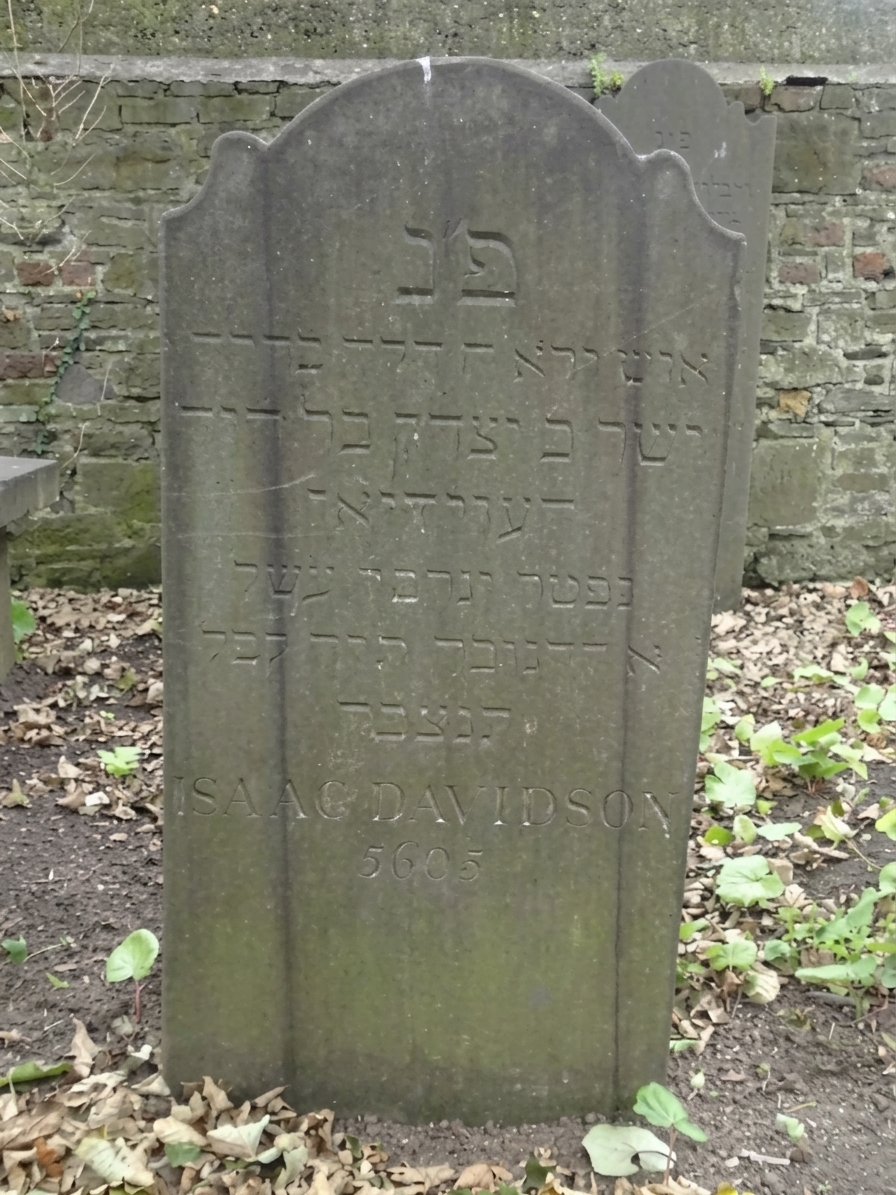
His Gravestone and Hebrew Date of Death
The Hebrew year 5605 is recorded on his gravestone. This corresponds to the Jewish year in which Davidson died. Historical records give his date of death as 6 December 1844.
The Historical Significance of Rev. Isaac Davidson
Rev. Isaac Davidson represents an important part of the early history of Jewish religious life in Ireland.
His appointment in 1829 came at a time when the Dublin Jewish community was relatively small and its religious institutions were still developing.
By serving as reader, shochet and Mohel, he fulfilled several important responsibilities within the congregation. His career also illustrates the importance of maintaining traditional Jewish religious practices, including Brit Milah, within smaller Jewish communities outside the larger centres of Jewish life in Britain and Europe.
His burial at Ballybough Cemetery provides a lasting connection to this early period of Dublin Jewish history. Davidson wil be remembered not merely as someone buried at Ballybough, but as one of the people who helped establish and sustain organised Jewish religious life in nineteenth-century Dublin.